CHIHAI: Your Professional Brushless DC Motor Manufacturer!

Wide Product

Shenzhen Chihai Motor Co., Ltd., founded in 2002, is a professional manufacturer of micro dc motors and dc reduction motors. Our business started with micro motor, then developed several series of DC deceleration motor.

Professional Team

Our team members have years of experience and are experts in their respective fields. We have more than 210 skilled employees and 26 technical engineers.

24H Online Service

The needs of our clients are always our top priority. We listen carefully to their concerns and work collaboratively to find solutions.

Competitive Price

We offer competitive pricing on all of our products, and we work with our clients to create a budget that meets their needs.

First 123456 Last

Purpose of Chain Sprockets


A Brushless DC Motor, also known as small DC motor, is a small, electric motor that uses direct current (DC) to produce mechanical force. These motors are compact and find applications in a wide range of devices and systems.

Features of Brushless DC Motor


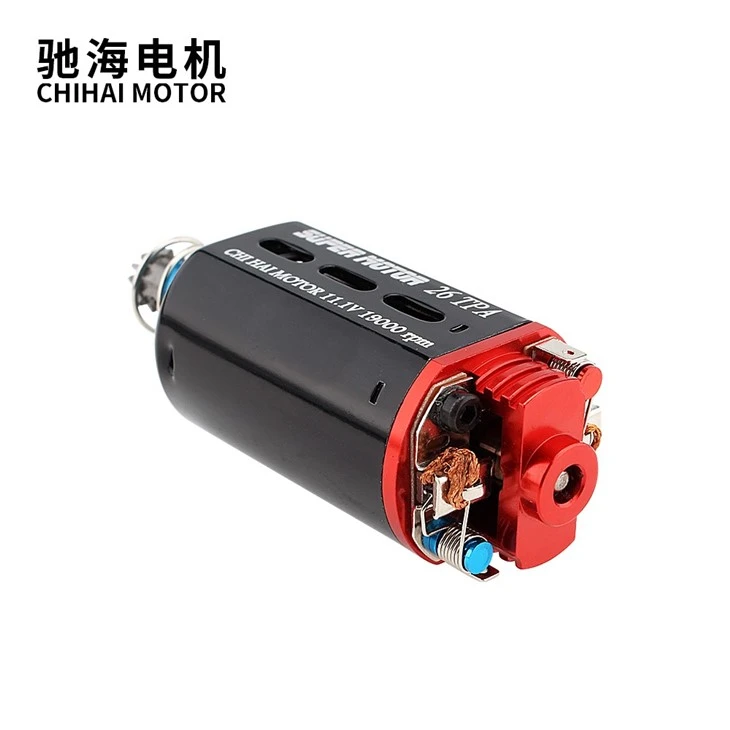
CHF-480WA HIGH Torque Motor

Efficiency

As these motors can control continuously at maximum rotational force (torque). Brushed motors, in contrast, reach maximum torque at only certain points in the rotation. For a brushed motor to deliver the same torque as a brushless model, it would need to use larger magnets. This is why even small BLDC motors can deliver considerable power.

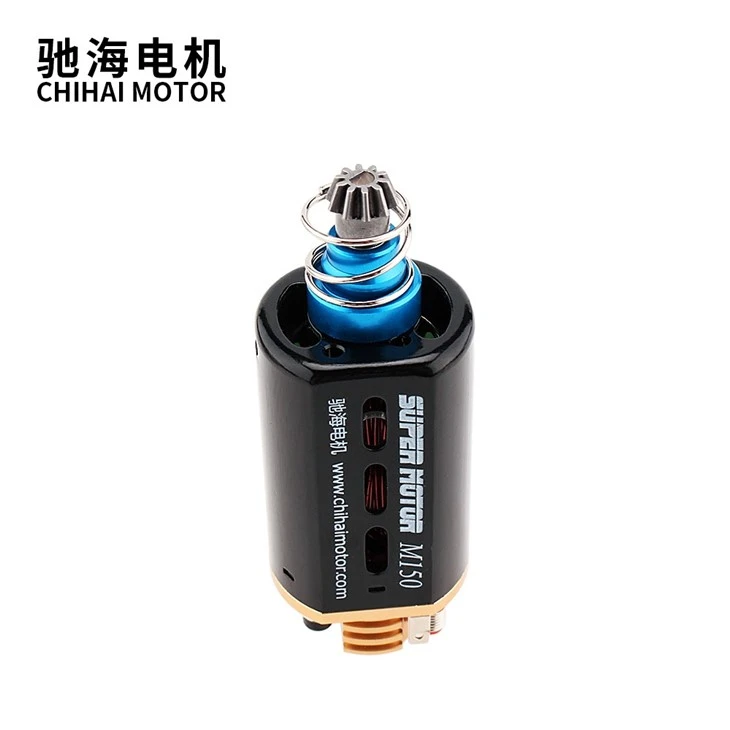
480 Medium Speed High Torque Shaft Motor

Controllability

BLDC motors can be controlled, using feedback mechanisms, to deliver precisely the desired torque and rotation speed. Precision control, in turn, reduces energy consumption and heat generation, and—in cases where motors are battery-powered—lengthens the battery life.

480 Medium Speed High Torque Shaft Motor

High Durability and Low Electric Noise

BLDC motors lack of brushes. With brushed motors, the brushes and commutator wear down as a result of continuous moving contact and also produce sparks where contact is made. Electrical noise, in particular, is the result of the strong sparks that tend to occur at the areas where the brushes pass over the gaps in the commutator. This is why BLDC motors are often considered preferable in applications where it is important to avoid electrical noise.

Types of Brushless DC Motor

Two main styles of the BLDC motor exist: inrunner and outrunner.

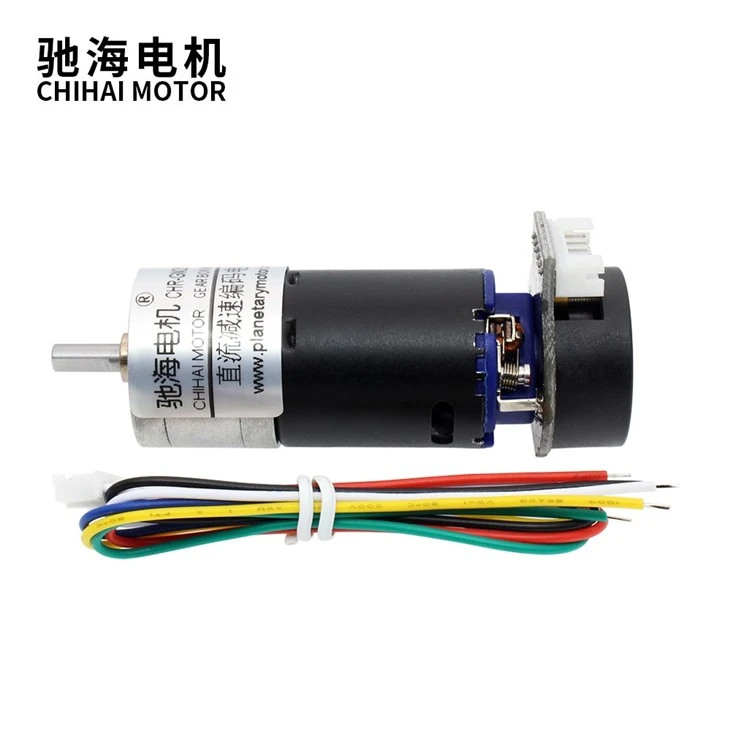
GM25-BK370 Hall Encoder DC Gear Motor

Inrunner BLDC

They arrange electromagnets inside a fixed outer housing, while permanent magnets are on the internal rotor. Inrunners typically spin faster than outrunners, producing lower torque at a given size. Inrunner motors have the advantage of better protection from the elements and better cooling since the electromagnet coils are attached directly to the external housing.

Turntable Rotation Gear Motor CHW-9L370

Outrunner BLDC

They have permanent magnets on the outer section that moves as it turns the output shaft. BLDCs typically have more torque for a given size than inrunners and operate at a lower speed. Electromagnets are arranged on the inner stator section. They don't cool as well as their inrunner counterparts, and the housing doesn't provide as much protection from the elements.

Applications of Brushless DC Motor


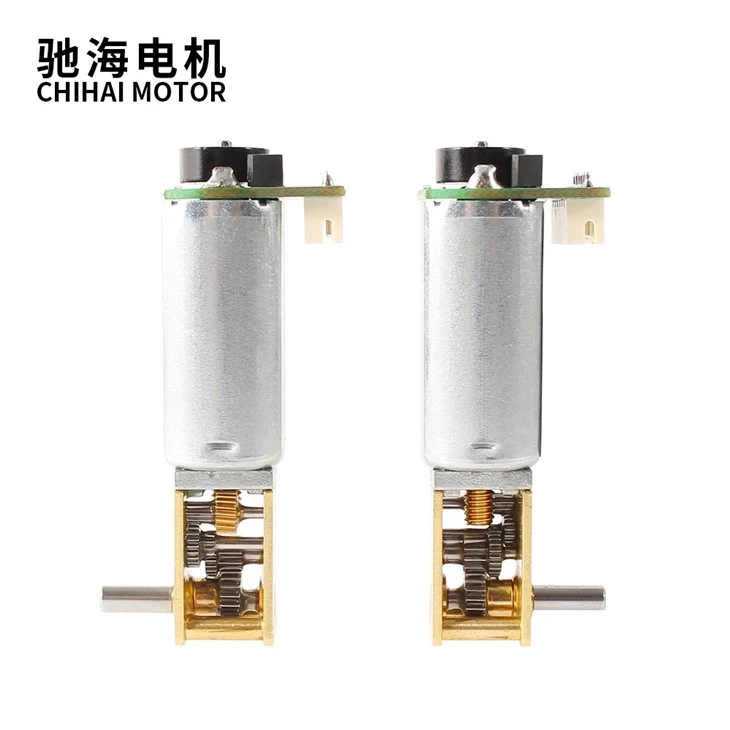
Mini DC Worm Motor With Encoder

Transport

Brushless motors are found in electric vehicles, hybrid vehicles, personal transporters, and electric aircraft. Most electric bicycles use brushless motors that are sometimes built into the wheel hub itself, with the stator fixed solidly to the axle and the magnets attached to and rotating with the wheel. The same principle is applied in self-balancing scooter wheels. Most electrically powered radio-controlled models use brushless motors because of their high efficiency.

Cordless Tools

Brushless motors are found in many modern cordless tools, including some string trimmers, leaf blowers, saws (circular and reciprocating), and drills/drivers. The weight and efficiency advantages of brushless over brushed motors are more important to handheld, battery-powered tools than to large, stationary tools plugged into an AC outlet.

Heating and Ventilation

There is a trend in the heating, ventilation, and air conditioning (HVAC) and refrigeration industries to use brushless motors instead of various types of AC motors. The most significant reason to switch to a brushless motor is a reduction in power required to operate them versus a typical AC motor. In addition to the brushless motor's higher efficiency, HVAC systems, especially those featuring variable-speed or load modulation, use brushless motors to give the built-in microprocessor continuous control over cooling and airflow.

Industrial Engineering

The application of brushless DC motors within industrial engineering primarily focuses on manufacturing engineering or industrial automation design. Brushless motors are ideally suited for manufacturing applications because of their high power density, good speed-torque characteristics, high efficiency, wide speed ranges and low maintenance. The most common uses of brushless DC motors in industrial engineering are motion control, linear actuators, servomotors, actuators for industrial robots, extruder drive motors and feed drives for CNC machine tools.

Aeromodelling

Brushless motors have become a popular motor choice for model aircraft including helicopters and drones. Their favorable power-to-weight ratios and wide range of available sizes have revolutionized the market for electric-powered model flight, displacing virtually all brushed electric motors, except for low powered inexpensive often toy-grade aircraft. They have also encouraged the growth of simple, lightweight electric model aircraft, rather than the previous internal combustion engines powering larger and heavier models. The increased power-to-weight ratio of modern batteries and brushless motors allows models to ascend vertically, rather than climb gradually. The low noise and lack of mass compared to small glow fuel internal combustion engines is another reason for their popularity.

Radio-Controlled Cars

Their popularity has also risen in the radio-controlled (RC) car area. Brushless motors have been legal in North American RC car racing by Radio Operated Auto Racing (ROAR) since 2006. These motors provide a great amount of power to RC racers and, if paired with appropriate gearing and high-discharge lithium polymer (Li-Po) or lithium iron phosphate (LiFePO4) batteries, these cars can achieve speeds over 160 kilometers per hour (99 mph).

Brushless motors are capable of producing more torque and have a faster peak rotational speed compared to nitro- or gasoline-powered engines. Nitro engines peak at around 46,800 r/min and 2.2 kilowatts (3.0 hp), while a smaller brushless motor can reach 50,000 r/min and 3.7 kilowatts (5.0 hp). Larger brushless RC motors can reach upwards of 10 kilowatts (13 hp) and 28,000 r/min to power one-fifth-scale models.

BLCD control methods


With rotational information provided by dedicated sensors or back EMF, BLDC control can be implemented by one of three methods: trapezoidal, sinusoidal, and field-oriented control (FOC). 

Trapezoidal Control

It is the simplest method for powering a BLDC, energizing each phase in sequence. Coils are energized in either a high or low state or can be left floating. While broadly applicable, this is often not as effective as using more advanced techniques and can produce audible noise.


Sinusoidal Control

It energizes each BLDC coil using variable duty-cycle PWM techniques to simulate analog outputs. This allows for a much smoother transition between states, using a lookup table to determine the correct signal. Coils are often energized in a saddle pattern, rather than a pure sinusoidal output.


Field-Oriented Control (FOC)

It works similarly to variable-output sinusoidal control but also takes the motor's changing winding currents into account when calculating voltage inputs. FOC can produce constant torque and speeds with low acoustic noise and is the most efficient way to drive a BLDC motor.


Construction of Brushless Motors


Mini DC Worm Motor With Encoder

The Stator


The stator of a Brushless DC Motor consists of stacked steel laminations with windings positioned in slots that are cut into the laminations. The stator of a Brushless DC Motor is equivalent to that of an AC motor, but the windings are different. There are three stator windings in each Brushless DC Motor wired in either a Delta or star configuration. In each of these windings, there are multiple coils that are constructed to connect together to form a winding.


There are two main types of stator windings: sinusoidal and trapezoidal. The difference in the stator windings is identified in the interconnection of the coils of the stator windings, which result in a different type of back-EMF. The trapezoidal variant delivers its back-EMF in a trapezoidal shape. A sinusoidal variation gives the Brushless DC Motor a back-EMF that matches the current. Sinusoidal Brushless DC Motors have smoother output torque than trapezoidal Brushless DC Motors.

The Rotor


The rotor is made up of permanent magnets, and normally has between two and eight poles. The magnets are bonded onto the rotor core in alternating north and south pole fields. Permanent magnet rotors are generally constructed with ferrite magnets. If a higher power density is needed in an application, rare earth magnets are generally being used.


Higher power density means that Brushless DC Motors can put out much more torque per unit volume, which is helpful to manufacturers who are continuously pushed to provide smaller and smaller packages. The ferrite magnets are less expensive, but the flux density is lower than that of the rare earth magnets. The price of rare earth magnets is also coming down. Rare earth magnet types include Neodymium (Nd) Samarium Cobalt (SmCo) The alloy of Neodymium, Ferrite, and Boron (NdFeB)

Brushless Stepper Worm Gear Motor


Brushless Stepper Worm Gear Motor

Brushed Motors Vs Brushless Motors

Lifetime

As previously mentioned, one of the disadvantages of brushed motors is that there is mechanical wear of the brushes and commutator. Carbon brushes in particular are sacrificial, and in many motors they are designed to be replaced periodically as part of a maintenance program. The soft copper of the commutator is also slowly worn away by the brushes, and eventually reach a point where the motor will no longer operate. Since brushless motors have no moving contacts, they do not suffer from this wear.

Speed and Acceleration

Brushed motors rotational speed can be limited by the brushes and commutator, as well as the mass of the rotor. At very high speeds, the brush to commutator contact can become erratic, and brush arcing increases. Most brushed motors also use a core of laminated iron in the rotor, which gives them large rotational inertia. This limits the acceleration and deceleration rates of the motor. It is possible to build a brushless motor with very powerful rare earth magnets on the rotor, which minimizes the rotational inertia. Of course, that increases the cost.

Electrical Noise

The brushes and commutator form a kind of electrical switch. As the motor turns, the switches are being opened and closed, while significant current is flowing through the rotor windings, which are inductive. This results in arcing at the contacts. This generates a large amount of electrical noise, which can get coupled into sensitive circuits. Arcing can be somewhat mitigated by adding capacitors or RC snubbers across the brushes, but the instantaneous switching of the commutator always generates some electrical noise.

Acoustic Noise

Brushed motors are "hard switched" – that is, current is abruptly moved from one winding to another. The torque generated varies over the rotation of the rotor as the windings get switched on and off. With a brushless motor, it is possible to control the winding currents in a way that gradually transitions current from one winding to another. This lowers torque ripple, which is a mechanical pulsation of energy onto the rotor. Torque ripple causes vibration and mechanical noise, especially at low rotor speeds.

Cost

Since brushless motors require more sophisticated electronics, the overall cost of a brushless drive is higher than that of a brush motor. Even though a brushless motor is simpler to manufacture than a brushed motor, since it lacks brushes and a commutator, brushed motor technology is very mature and manufacturing costs are low. This is changing as brushless motors become more popular, especially in high volume applications like automotive motors. Also, the cost of electronics, like microcontrollers, continues to decline, making brushless motors more attractive.

  Brushed motor Brushless motor
Lifetime Short (brushes wear out) Long (no brushes to wear)
Speed and Acceleration Medium High
Efficiency Medium High
Electrical Noise Noisy (bush arcing) Quiet
Acoustic Noise & Torque Ripple Poor Medium (trapezoidal) or good (sine)
Cost Lowest Medium (added electronics)


Our Certifications and Brushless DC Motor


productcate-800-572

productcate-750-597

All Metal Gear

productcate-750-576

Double Flat Shaft

productcate-750-696

Ball Bearing

Frequently Asked Questions about Airsoft Motor

Q: What is a brushless DC motor?

A: A motor converts supplied electrical energy into mechanical energy. Various types of motors are in common use. Among these, brushless DC motors (BLDC) feature high efficiency and excellent controllability, and are widely used in many applications. The BLDC motor has power-saving advantages relative to other motor types.

Q: What are the properties of a brushless DC motor?

A: Brushless motors offer several advantages over brushed DC motors, including high torque to weight ratio, increased efficiency producing more torque per watt, increased reliability, reduced noise, longer lifetime by eliminating brush and commutator erosion, elimination of ionizing sparks from the commutator, and an overall reduction of electromagnetic interference (EMI). With no windings on the rotor, they are not subjected to centrifugal forces, and because the windings are supported by the housing, they can be cooled by conduction, requiring no airflow inside the motor for cooling. This in turn means that the motor's internals can be entirely enclosed and protected from dirt or other foreign matter.

Q: Are brushless DC motors better?

A: Various types of motors are in common use. Among these, brushless DC motors (BLDC) feature high efficiency and excellent controllability, and are widely used in many applications. The BLDC motor has power-saving advantages relative to other motor types.

Q: What is the purpose of a brushless DC motor?

A: The most common uses of brushless DC motors in industrial engineering are motion control, linear actuators, servomotors, actuators for industrial robots, extruder drive motors and feed drives for CNC machine tools.

Q: How long do brushless DC motors last?

A: 10,000 hours. Used in medical equipment, Brushless DC Motors have a life expectancy of 10,000 hours, versus the 2,000-5,000 hour lifespan of a typical brushed motor. Brushless DC Motors also have a top speed that is not limited by a large number of poles.

Q: What controls a brushless DC motor?

A: BLDC motors feature closed-loop control, typically via a Hall effect sensor or by detecting back EMF. Rotational output can be controlled with a high degree of accuracy by varying the speed of the coil sequence.

Q: Are brushless motors quieter?

A: As the brushes wear the not create dust but noise caused by the rubbing against the commutator. Brushless motors have longer service lives and are cleaner and quieter because they do not have parts the rub or wear during use.

Q: Do brushless motors need maintenance?

A: Just as with regular brushed motors, dirt can accumulate inside a brushless motor. We do not recommend the use of motor spray to clean the windings inside the motor can (stator). Racers who use motor spray simply make any problems worse. Instead, use a small brush and light air pressure to clean inside the motor.

Q: Do batteries last longer with brushless motors?

A: Because there are no brushes rubbing against anything, no energy is lost due to friction. That means brushless motors are more energy-efficient than brushed drills and can run on batteries for up to 50 percent longer.

Q: Why do DC brushless motors have 3 wires?

A: Brushless DC motors have 3 wires because they typically have 3-phase windings inside the motor. These 3 phases are used to control the rotation of the motor and generate a magnetic field to make the motor turn. The 3 wires provide a connection to each of these phases, allowing them to be powered and controlled.

Q: Can you control the speed of a brushless DC motor?

A: In a brushless DC motor, the relationship between the applied voltage and the load torque determines the rotational speed. This means that, when using the motor, you can control the rotational speed of the motor by changing the applied voltage.

Q: Why is my brushless motor so loud?

A: In the brushless motor, the permanent magnet enters the air gap roughly along the radial direction, and generates radial force on the stator and rotor, thus causing electromagnetic vibration and noise.

Q: Can you repair a brushless motor?

A: Brushless motors can also be rebuilt to keep them running for years of high performance fun. Bearings are the typical failure point for brushless motors. Failing bearings usually cause the motor to run hot and may reduce performance and run time.

Q: Do brushless motors cost more?

A: Since brushless motors require more sophisticated electronics, the overall cost of a brushless drive is higher than that of a brush motor.

Q: Will a brushless DC motor run on AC?

A: Brushless motors can use both low-voltage DC and high-voltage AC. If the BLDC motor controller is connected to AC, the driver converts AC to DC for the motor to work. If DC is input, the brushless motor controller does not need to convert. High-voltage AC power is easy to obtain and can provide motor power.

Q: Why are brushless motors quieter?

A: Friction and electrical arcing between brushes and commutator plates in brushed motors produce substantial motor noise. In brushless motors, the job of commutation is carried out by an electronic circuit, resulting in much quieter operation.

We're professional brushless DC motor manufacturers in China for over 15 years, specialized in providing high quality customized products. We warmly welcome you to wholesale bulk brushless DC motor in stock here from our factory.

Send Inquiry