CHIHAI: Your Professional Encoder Motor Manufacturer!

Wide Product

Shenzhen Chihai Motor Co., Ltd., founded in 2002, is a professional manufacturer of micro dc motors and dc reduction motors. Our business started with micro motor, then developed several series of DC deceleration motor.

Professional Team

Our team members have years of experience and are experts in their respective fields. We have more than 210 skilled employees and 26 technical engineers.

24H Online Service

The needs of our clients are always our top priority. We listen carefully to their concerns and work collaboratively to find solutions.

Competitive Price

We offer competitive pricing on all of our products, and we work with our clients to create a budget that meets their needs.

First 1234567 Last

What is a Encoder Motor?


Motor encoders are rotary encoders adapted to provide information about an electric motor shaft's speed and/or position. Like rotary encoders in general, motor encoders are most commonly magnetic or optical and produce signals that are either incremental or absolute.

Benefits of Using Encoder Motor


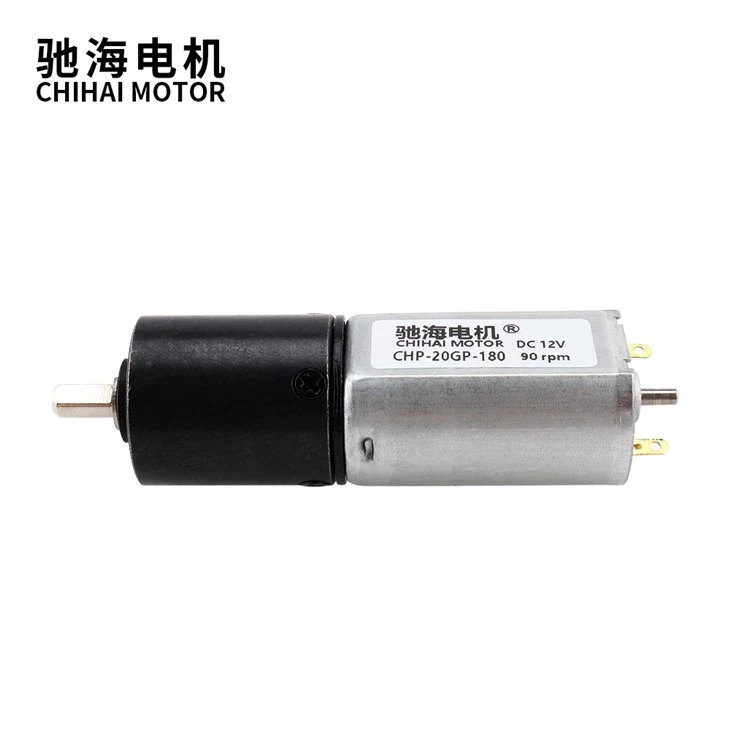
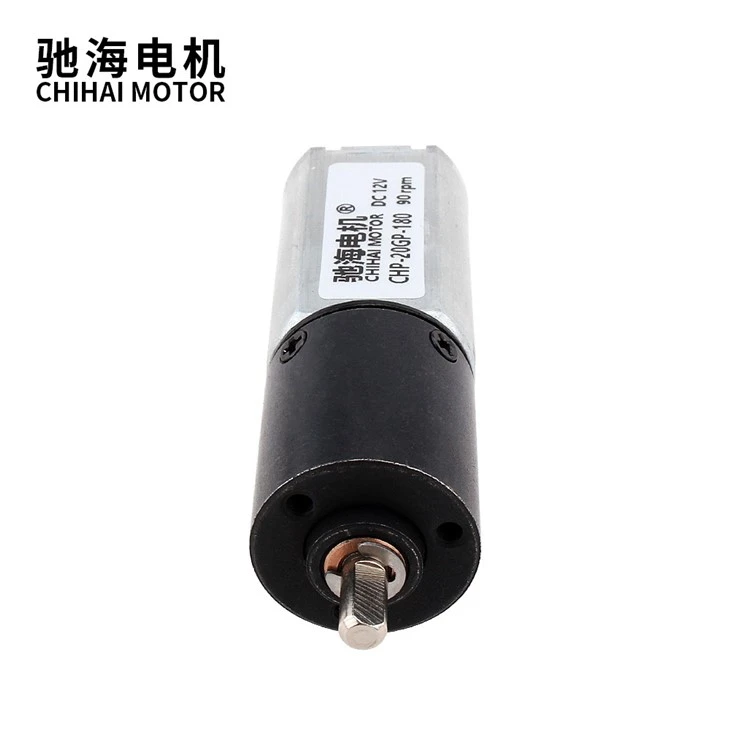
CHP-20GP-180 Dc Planetary Gear Motor

Position Verification

When pushed beyond its limits, a step motor will stall before reaching the endpoint. This event typically occurs when motors are not adequately specified for high-cycle applications. An encoder can provide position feedback at the end of the motion profile, indicating if the step motor stopped before reaching the end position. The controller compares the encoder counts that define the actual motor position to the target motor position at the end of a move to determine if there is a difference. If the encoder counts don't match to the actual motor position, a corrective move or motion profile is calculated and executed.
Position verification uses the simplest algorithm and is performed using the most basic controller or microprocessor; however, this function requires waiting for the motion profile to complete before making calculations and corrections. As a result, operators can wait a long time before executing the corrective move. Position verification is ideally suited for low-cycle and low-volume applications such as in a test or lab environment, or operations with manual processes where cycle time is not an issue.

Stall Detection

Stall detection notifies the user/system/machine as soon as a motor stall occurs, eliminating the uncertainty of whether or not the motor reached its target position. A more advanced function than position verification, stall detection enables the controller to compare the registers of the encoder counts and target motor position on a continuous basis instead of just at the end of the move. The comparison runs continuously in the background. As a result, the stall condition is detected immediately without waiting for the motor to complete an empty cycle so corrective moves are executable sooner.


Upon detecting a stall, the controller also can alert a higher-level PLC, PC, or HMI to avoid disruptions in overall machine function, or request intervention by a human operator. As soon as the controller detects a problem in the move profile, it triggers corrective action. Stall detection is better for time-sensitive applications or when cycle times are important. It is the minimum level of functionality for an industrial solution.

Stall Prevention

While greatly increasing system functionality, stall detection does not inherently improve step motor performance; it still requires the operator to perform a corrective move and re-reference the axis to the home position. Stall prevention, on the other hand, dynamically and automatically adjusts the move profile to prevent a stall, enabling the motor to operate with constant torque to get into an accurate end position without stalling. The controller intuitively adjusts the motor speed where the torque is sufficient to keep the motor moving and eliminate the lag between actual encoder counts and target motor position. In this way, the motor continues to run, albeit at a reduced maximum speed.
The scale of the speed reduction is directly related to the difference in the motor's available torque and the torque demanded by the motion profile. In many cases, the change in speed will be very small or imperceptible to the user. While the motor completes a move profile and successfully reaches the target end position, the tradeoff is increased overall motion time.
Stall prevention offers advantages over stall detection should operations not go as planned due to increased friction, load variation, or other factors. In practice, you wouldn't design a system so that the drive/controller is constantly adjusting the move profile. Ultimately, the system will take longer to complete moves, which could negatively impact overall machine operation.

Servo Control and Increased Motor Torque

Using encoder feedback to servo-control, a step motor increases motor torque for greater dynamic performance. With peak torques up to 50% higher than the rated holding torque of the motor, the servo-controlled step motor system can operate at higher acceleration rates and with higher throughput for faster machine cycles.
 
Types of Encoder Motor


AC Motor Encoders

AC induction motors are cost-effective, sturdy, and durable. These qualities make them especially common in a wide range of automated machine control systems. Motor encoders give AC motors a greater degree of speed control than they otherwise would have. Because AC motors are used so widely, most applications put a premium on shock and vibration resistance. Encoders with industrial connector options like a conduit box, latching, or mil-spec are often preferred.

 
DC Motor Encoders

The exact speed of DC motors can be especially difficult to control without closed-loop feedback. Isolated from the rest of a system, a wound-wire shaft rotating within a stator's magnetic field can be measured with some precision; in real-world applications, motor encoders are often the only way to inform the system about a DC motor's exact speed.

 
Servo Motor Encoders

Permanent magnet motors, or servo motors, tend to be used in situations where precision is more important than power. Servo motor encoders follow suit and are often designed as high-resolution absolute encoders for use in closed loop systems. Incremental encoder feedback, when coupled with the appropriate control system, can be a lower cost feedback alternative for servo motors.

 
Stepper Motor Encoders

Stepper motors provide position information by virtue of their design, making them popular, cost-effective components in open loop systems. This feature also prevents them from offering precise speed control, especially when loads change frequently and suddenly. Stepper motor encoders provide closed loop feedback for more precise control, and are often incremental to enhance the position control inherent in stepper motor design. Many stepper motors are compact in size and are suitable for modular encoders that do not use bearings.


Product Center


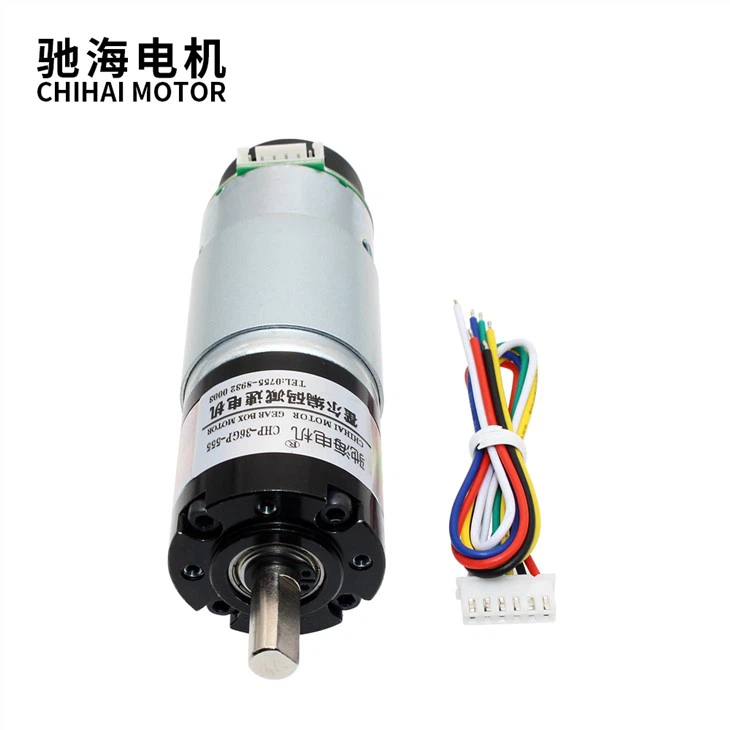
DC Planetary Gear Reduction Motor With Encoder

In a Cut-To-Length Application

An encoder with a measuring wheel tells the control device how much material has been fed, so the control device knows when to cut.

CHP-20GP-180 Dc Planetary Gear Motor

In an Observatory

The encoders tell actuators what position a moveable mirror is in by providing positioning feedback.

CHF-480WA HIGH Torque Motor

On Railroad-Car Lifting Jacks

Precision-motion feedback is provided by encoders, so the jacks lift in unison.

CHP-20GP-180 Dc Planetary Gear Motor

In a Precision Servo Label Application System

The encoder signal is used by the plc to control the timing and speed of bottle rotation.

480 Medium Speed High Torque Shaft Motor

In a Printing Application

Feedback from the encoder activates a print head to create a mark at a specific location.

480 Medium Speed High Torque Shaft Motor

With a Large Crane

Encoders mounted to a motor shaft provide positioning feedback so the crane knows when to pick up or release its load.

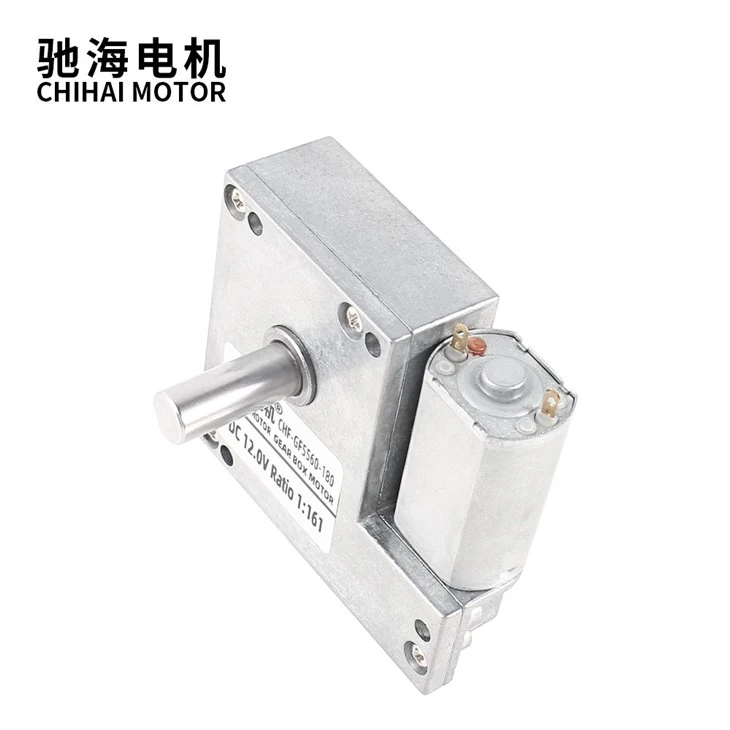
GF5560-180 Dc Turboworm Gear Reduction Motor

In an Elevator

Encoders tell the controller when the car has reached the correct floor, in the correct position. That is, encoder motion feedback to the elevator's controller ensures that elevator doors open level with the floor. Without encoders, you might find yourself climbing in or out of an elevator, rather than simply walking out onto a level floor.

48GE Permanent Magnet DC Micro Plastic Gear Motor

On Automated Assembly Lines

Encoders give motion feedback to robots. On an automotive assembly line, this might mean ensuring the robotic welding arms have the correct information to weld in the correct locations.

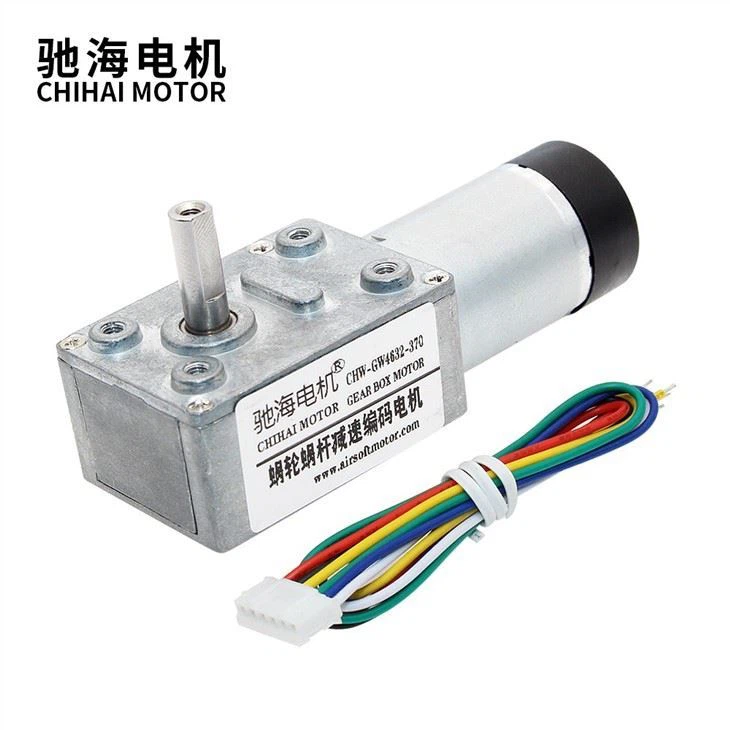
Turntable Rotation Gear Motor CHW-9L370

Position and Speed Control of Encoder Motor


Rule 1: Encoder for Positioning

A good recommendation is to select an encoder with a number of pulses higher than 360° divided by the required angular position accuracy; in other words, a number of states that is four to ten times higher. For positioning, select an encoder with a line driver (differential signal).

Rule 2: Encoder for High-Precision Positioning

Select optical encoders with a line driver for high-precision positioning. They have a higher resolution, less jitter, and a lower INL than interpolated magnetic encoders.

Rule 3: Encoder for Positioning with Mechanics

Select a magnetic encoder with a line driver and with a moderate or low number of states. The mechanical reduction will increase the resolution. Due to the mechanical play, the system will not be able to benefit from a high-precision optical encoder.

Rule 4: Encoder for High-Speed Control (> 500 Rpm)

Select an encoder with a moderate or low number of states and a sufficiently high maximum speed rating. There is usually not a need for a high-precision optical encoder. A good rule of thumb that is usually sufficient for most applications is (speed in RPM) × (encoder resolution in CPT) > 100,000.

Rule 5: Encoder for Low-Speed Control (< 100 Rpm)

Select an encoder with a high or very high number of states in combination with a fast controller.

 
Mounting Options for Motor Encoders
Shafted Motor Encoders

Traditionally, motor feedback is achieved with a shafted encoder coupled directly to the motor's shaft. This gives shafted motor encoders a degree of electrical and mechanical isolation that other designs do not. Coupling a shafted encoder to a motor requires a long enough motor shaft for secure mounting, however. A poorly joined coupling can negatively impact a motor's performance by altering the shaft's angle. In many designs, a bell housing or standoff is used between the motor and encoder. These considerations typically add cost to shafted motor encoders.

Thru-Bore, Blind Hollow Bore/Hollow Shaft, and Hub Motor Encoders

Thru-bore and blind hollow bore/hollow shaft encoders are easier to install than shafted packages: they mount directly to the motor shaft via a pass-through shaft collar and usually use a flexible steel tether arm to attach to the motor housing. Some thru-bore housings attach via a motor-compatible housing, such as a C-face design. This approach does not require a separate coupling or subsequent shaft alignment. Thru-bore motor encoders do not inherently provide electrical isolation unless equipped with non-conducting bore inserts and mounting bushings. Most thru-bore and blind hollow bore/hollow shaft motor encoders usually have lighter duty bearings and housing structure and are typically lower cost than shafted models as a result.

Modular Motor Encoders

Modular encoders feature an encoder disk that is mounted directly to the shaft, without a bearing assembly. A separate sensor module is supported by a light duty housing. Benefits of this design are compact size and lower cost due to the reduced mechanical components. Additionally, the lack of bearings enables the encoder to operate at very high speeds – 30,000 RPM or higher – and without drag or starting torque. Modular encoders can be susceptible to shock and vibration, due to the absence of bearings or a stabilizing housing structure. Another drawback is that most designs require additional installation effort to ensure the disk and sensor are properly aligned and gapped.

Ring-Mount Motor Encoders

Like modular encoders but larger in scale, ring-mount motor encoders involve a sensor assembly mounted to the motor's housing, and a magnetic wheel mounted to the motor's shaft. The result is typically more resistant to shock, vibration, and contaminants than an optical encoder, but the magnetic wheel can place extra mechanical demands on the motor itself. Therefore, ring-mount encoders are especially useful in heavy-duty applications involving more powerful motors with more robust frames. Ring-mount encoders use relatively coarse resolution when compared to optical encoders, and are suitable only for speed and direction feedback.

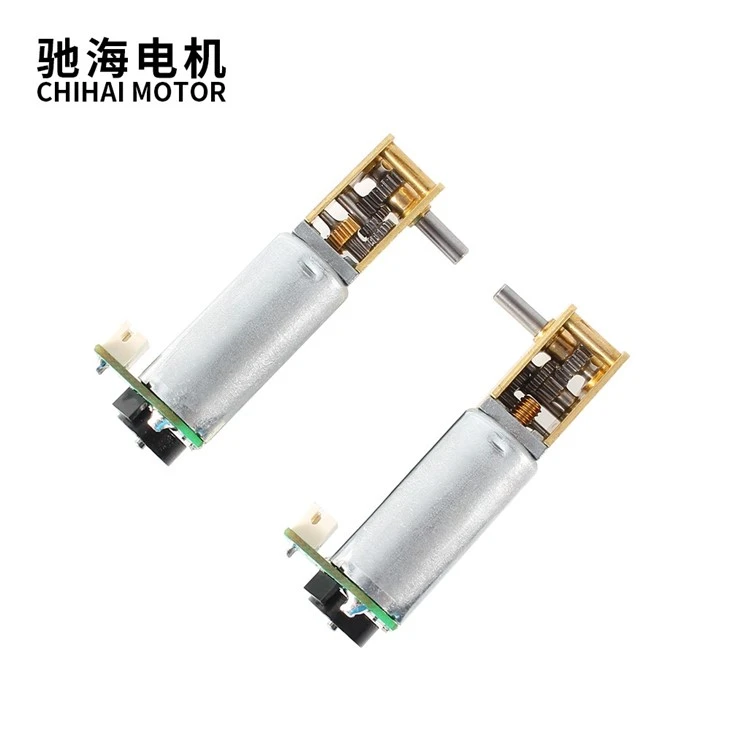
Mini DC Worm Motor With Encoder

What should be considered when choosing encoders?

Signal Type

Encoders provide information about the positioning of an object in the form of signals transmitted to the device. Older, albeit reliable, analog encoders use an analog signal for this. Analog encoders are popular due to their compatibility with many industrial controllers. The most common signals are 0-10 V and 4-20 mA. In this case, the voltage output is more susceptible to interference, and wiring resistance. The current output is more resistant to electrical noise and has low signal loss when transmitting data over long cable runs. At the same time, they are being successfully replaced by industrial encoders with a digital signal. In addition to the accuracy of transmission, they are also compatible with modern industrial interfaces.

Compatibility

Compatibility with industrial automation interfaces. While industrial systems are moving to full automation, it is important to select encoders that are suitable for interaction with the selected interface, for example, ProfiNet or ProfiBus compatible.

Degree of Protection

The degree of protection is an equally important parameter. Especially if you are using the encoder under difficult operating conditions, such as elevated temperatures due to motor heating.

Manufacturer

Even though such equipment is now offered by many manufacturers, quality and reliability are parameters that are not observed by all. If you want to get equipment that will work flawlessly, and provide data with maximum accuracy and speed, it is better to contact us.

 
Our Certifications and Encoder Motor


productcate-800-572

productcate-730-730

CHIHAI MOTOR

productcate-730-730

CHIHAI MOTOR

productcate-730-730

CHIHAI MOTOR


Frequently Asked Questions about Encoder Motor

Q: What is an Encoder Motor?

A: A motor encoder is a rotary encoder mounted to an electric motor that provides closed-loop feedback signals by tracking a motor shaft's speed and/or position. Various motor encoder configurations are available such as incremental or absolute, optical or magnetic, and shafted or hub/hollow shaft, among others.

Q: Can you add an encoder to a motor?

A: By itself, a DC motor can't be controlled like a servo motor or a stepper motor. But add an encoder, and you unlock the full potential of the DC motor. Using this approach, you can harness the simplicity, even torque, and lightweight profile of a DC motor for your controlled application.

Q: How does a encoder servo motor work?

A: Encoders use different types of technologies to create a signal, including: mechanical, magnetic, resistive and optical – optical being the most common. In optical sensing, the encoder provides feedback based on the interruption of light.

The graphic below outlines the basic construction of an incremental rotary encoder using optical technology. A beam of light emitted from an LED passes through the Code Disk, which is patterned with opaque lines (much like the spokes on a bike wheel). As the encoder shaft rotates, the light beam from the LED is interrupted by the opaque lines on the Code Disk before being picked up by the Photodetector Assembly. This produces a pulse signal: light = on; no light = off. The signal is sent to the counter or controller, which will then send the signal to produce the desired function.

Q: What is the purpose of an encoder?

A: An encoder is a sensing device that provides feedback. Encoders convert motion to an electrical signal that can be read by some type of control device in a motion control system, such as a counter or PLC. The encoder sends a feedback signal that can be used to determine position, count, speed, or direction.

Q: Is an encoder AC or DC?

A: Encoders are primarily used in speed and position control of AC induction motors and DC motors.

Q: What are the different types of encoder motors?

A: An encoder is classified into four types: mechanical, optical, magnetic, and electromagnetic induction types. There are four types of information necessary to rotate the motor with high accuracy: rotation amount, rotational speed, rotational direction, and rotational position.

Q: What's the difference between absolute and incremental encoders?

A: Encoders may produce either incremental or absolute signals. Incremental signals do not indicate specific position, only that the position has changed. Absolute encoders, on the other hand, use a different “word” for each position, meaning that an absolute encoder provides both the indication that the position has changed and an indication of the absolute position of the encoder.

Q: What the types of encoder technology?

A: 1)Optical encoder:
An optical encoder is one of the most commonly used encoders and it is composed of a light source a revolving disk and a light detector circuit. When it is powered on the light source or the LED is powered on and in the extreme opposite, that light source is the photodetector and in between, the encoder disk is placed. The encoder disk consists of a black disk that has preciously cut holes in between, through the holes the light is received by the photodetector, and it’s interrupted when there is no hole present. This makes the light pulse that is processed by the microcontroller and then it determines the direction in which it’s rotating, a mouse is a great example of this type of encoder.
2)Linear encoder:
A linear encoder is a type of encoder that is mostly used in industrial automation and control. It is a device that has a linear scale that determines its position. On the scale, there is a sensor, it can read the scale and determine its position. A digital Vernier caliper is a great example of a linear encoder. Linear encoders may or may not be absolute or incremental. This type of encoder is used in high-precision instruments like lathes and industrial automation tools.
3)Absolute encoder:
One of the most interesting encoders that you could learn about is the absolute encoder. Unlike an incremental encoder that provides continuous streams of bits while rotating, an absolute encoder is a type of encoder that outputs unique word bits for each position in space. This provides higher resolution than other incremental encoder types, also it can be adapted to different types of microcontrollers for better performance.
4)Incremental encoder:
An incremental encoder is another most common type of encoder that is commonly used for different types of applications. It is an encoder that converts angular motion to digital/analog signal depending upon the encoder type. An incremental encoder can be used to determine the position of the shaft of the motor and it’s used mostly in servo motors.

Q: What causes motor encoder failure?

A: The most common cause of encoder failure is a warped/ bent shaft that is no longer sitting on the bearings properly, an issue also referred to as shaft run-out. A warped shaft adds stress to the internal bearings and may lead to bearing failure and eventual overheating of the encoder.

Q: How do you test an encoder?

A: Turn on the encoder, rotate the shaft slowly, and observe the voltage reading on the multimeter. Check the voltage readings against the expected voltage levels specified in the encoder's datasheet. The voltage should change as the shaft is rotated, indicating the encoder is working correctly.

Q: How accurate are motor encoders?

A: Encoder accuracy is measured in arcminutes or arcseconds with 20 arcminutes (0.3 degrees) or better generally considered a high accuracy encoder with some precision devices on the order of 5 arcseconds (0.0014 degrees). The accuracy of an encoder reading can be degraded by multiple error sources.

Q: Why is my brushless motor so loud?

A: In the brushless motor, the permanent magnet enters the air gap roughly along the radial direction, and generates radial force on the stator and rotor, thus causing electromagnetic vibration and noise.

Q: What is a 4x4 encoder motor?

A: It is 4WD Transfer Case Shift Encoder Motor. The 4WD Transfer Case Shift Encoder motor is the part that turns the gear inside the transfer case, allowing your vehicle to be switched into 4x4 mode. The Shift Encoder Motor is located on the outside of the transfer case and is secured to the transfer case with 3 bolts.

We're professional encoder motor manufacturers in China for over 15 years, specialized in providing high quality customized products. We warmly welcome you to wholesale bulk encoder motor in stock here from our factory.

Send Inquiry